November 12, 2025
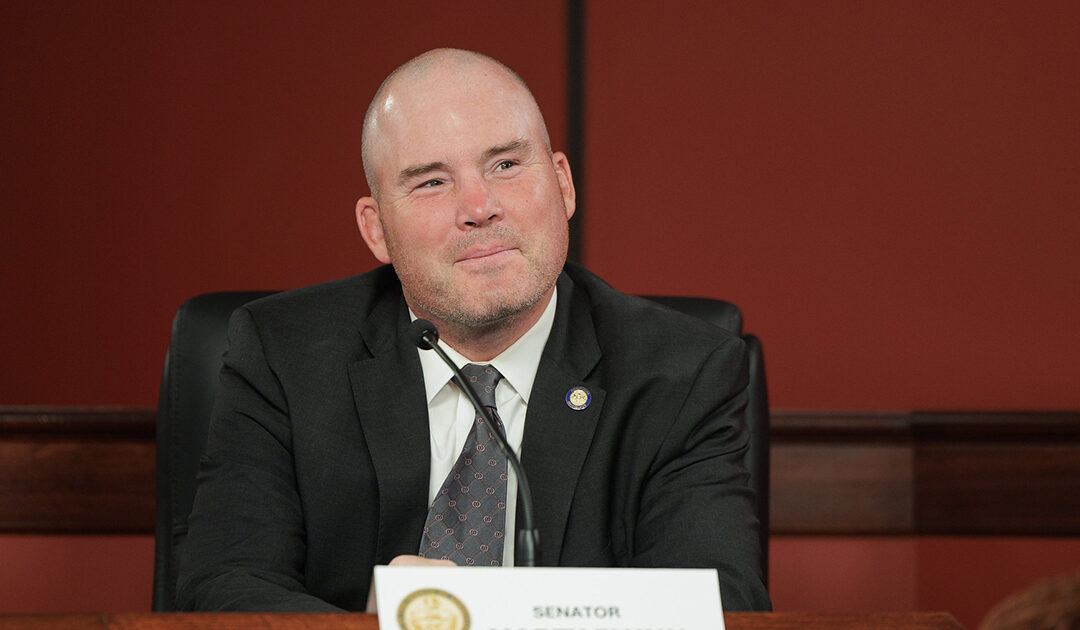
Harrisburg, PA – November 12, 2025 − Senator Marty Flynn applauds the General Assembly’s passage of the 2025-2026 Pennsylvania state budget, emphasizing that it keeps taxes level and provides relief for working families while strengthening education, childcare and food security programs. The budget delivers on Democrats’ promise of no tax increases and delivers tax cuts for nearly one million Pennsylvanians through the new Working Pennsylvanians Tax Credit.
“This budget delivers for the people of the 22nd Senatorial District. By prioritizing education and economic growth, without increasing taxes, we are laying a foundation for a brighter, more prosperous Northeastern Pennsylvania,” Senator Marty Flynn said. “I am proud to have worked with my colleagues across the aisle to get this done, and I look forward to seeing these investments translate into real progress in our region.”
Highlights of the 2025 – 2026 Budget
Tax policy
- No tax increases. The plan follows through on Democrats’ commitment to keep rates level.
- Creates the “Working Pennsylvanians Tax Credit”. This new credit cuts taxes for nearly one million working Pennsylvanians. In the 22nd Senatorial District alone, over 28,000 households, representing nearly 42% of households in our community, are projected to be eligible for the Working Pennsylvanians Tax Credit.
Education funding
- $526 million to meet the Commonwealth Court mandate for adequate and constitutional school funding (Adequacy & Equity, year two).
- $175 million in district savings from cyber charter funding reform.
- $40 million increase for special education.
- $125 million for school facilities improvements.
- $100 million for school safety and student mental health initiatives.
- $30 million for student teacher stipends to strengthen the educator pipeline.
Childcare and basic needs
- $25 million for childcare workforce retention and recruitment to stabilize programs and expand access.
- $11 million increase for the State Food Purchase Program and Farmers’ Market Coupons, ensuring food banks and pantries can meet growing demand.
“At the end of the day, this budget is about people and ensuring every family, student, and community in Pennsylvania has the tools to thrive. It’s proof that when we work together, we can deliver real results that move our Commonwealth forward,” Flynn said. This plan invests in childcare, strengthens food assistance programs, and helps families manage rising costs. It is a responsible budget that reflects real priorities, focusing on education, opportunity, and stability for working people.”

September 11, 2025
Harrisburg, PA – September 11, 2025 – Senator Marty Flynn announced that the Pennsylvania Commission on Crime and Delinquency (PCCD) has approved $2,526,374 in Federal Victims of Crime Act (VOCA) funding to strengthen victim services across Lackawanna, Luzerne, Susquehanna, Carbon, and Wyoming Counties.
The funding will support agencies providing critical services for victims of domestic violence, child abuse, and other crimes. These awards were approved by PCCD pending the resolution of any outstanding fiscal or programmatic concerns.
“Every victim’s story is different, but the need for support is universal. These funds give frontline organizations the resources to provide crisis intervention, advocacy, counseling, and prevention programs that protect vulnerable residents and help communities heal. I’m grateful to help bring this funding home to strengthen the organizations that stand beside victims and families when they need it most.” said Senator Flynn.
The VOCA funds are part of a broader federal initiative designed to expand and sustain victim service programs statewide. By supporting county agencies and nonprofit partners, the funding helps ensure that victims across Northeastern Pennsylvania have access to advocacy, crisis intervention, and specialized services.
Grant Awards Approved: Total: $2,526,374
- Lackawanna County Commissioners AAA Office – $132,218 for VOCA Lackawanna County Aging EJMDT Continuation (Lackawanna County)
- Lackawanna County Commissioners DA’s Office – $198,368 for Continuing VOCA Services (Lackawanna County)
- Children’s Advocacy Center of Northeastern Pennsylvania – $84,507 for VOCA Continuation Grant (Lackawanna County)
- Women’s Resource Center, Inc. – $608,453 for WRC VOCA 2025–2026 (Lackawanna & Susquehanna Counties)
- Luzerne County Child Advocacy Center – $199,694 for Child Abuse Services (Luzerne County)
- Domestic Violence Service Center, Inc. – $670,914 for Domestic Violence Program Services (Luzerne, Carbon, and Wyoming Counties)
- Victims Resource Center – $632,220 for VOCA Services to Victims of Crime (Luzerne, Carbon, and Wyoming Counties)
September 3, 2025
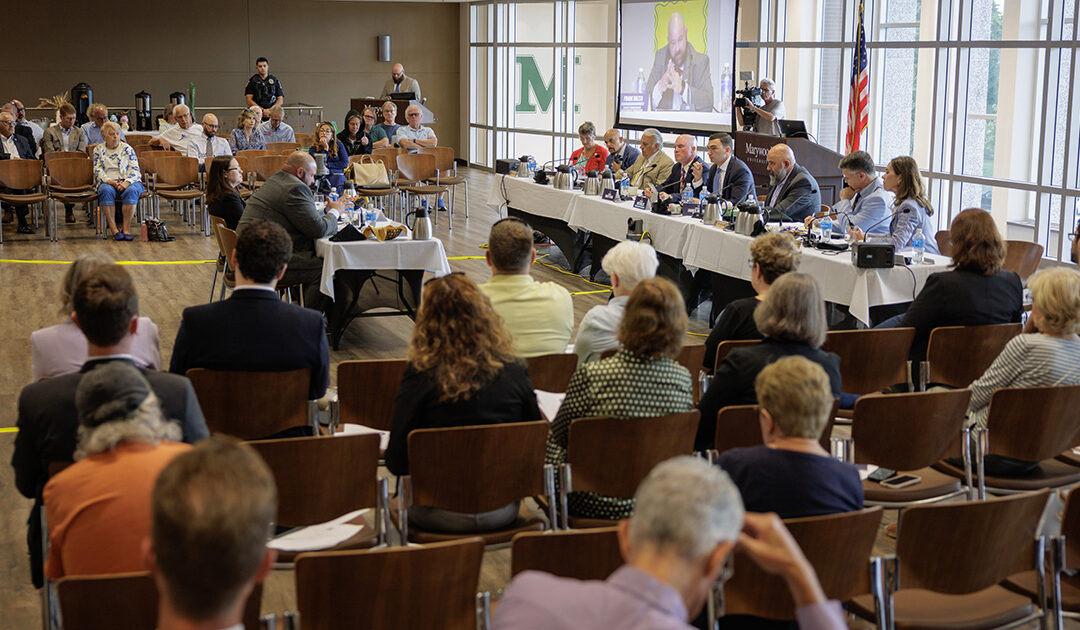
SCRANTON, PA − September 3, 2025 − Senate Democratic Policy Committee Chair Nick Miller held a hearing to examine pending proposals from the legislature and discuss details of data center infrastructure and technology.
“As the Policy and Democratic Chair of the Senate Communications and Technology Committee, today’s hearing was to discuss and learn more about data centers and the impact on our communities,” said Senator Miller. “While data centers can greatly enhance economic development, they also require substantial energy which will impact our energy future. Pennsylvania has the potential to emerge as a national leader in crafting strategies that promote long-term energy resilience, economic growth, and innovation. Thank you to all the testifiers and my co-host Senator Flynn for their contributions in our hearing as we address this topic together.”
“As data centers continue to expand across our region and throughout Pennsylvania, it is critical that we carefully weigh both the opportunities they bring and the challenges they create,” said Senator Marty Flynn. “Today’s hearing was about ensuring Pennsylvania is prepared, not only to attract investment but to do so in a way that balances growth with responsible energy use, environmental sustainability, and community impact. By bringing together industry leaders, policymakers, and organizations on the ground, we can develop a thoughtful path forward that delivers economic growth while protecting the long-term interests of the people we serve.”
Stephen DeFrank, Chairman of the Pennsylvania Utility Commission, highlighted the need to have proper planning as he testified to the Commonwealth’s unique position at a Federal Energy Regulatory Commission (FERC) Technical Conference last November on data centers and their interconnection to electricity grid.
“Many Pennsylvanians know all too well the costs of poorly planned development. While our industrial heritage has contributed to our economic prosperity, we have left future generations to deal with the impacts of poor – or no planning,” said DeFrank. “This is why we must make certain that the mistakes of our past are not repeated in the present to leave problems for the future. Now, at the beginning of this new wave of technological growth, is the time to make sure things are well-planned and done right.”
DeFrank explained Pennsylvania is experiencing extraordinary times in the energy sector and the decisions we make in the next five to seven years will impact us for the next 70 years, which requires prudent planning to benefit all utility customers, local municipalities, and the Commonwealth.
Tony Nokovich, Vice President of Engineering at Pennsylvania American Water, emphasized the importance of supporting data center growth while highlighting key considerations such as water demand forecasting, infrastructure cost-sharing, capacity agreements, alternative water sourcing, and operational resilience.
“Pennsylvania American Water is well positioned to manage this stress because we invest approximately $700 million in infrastructure upgrades on an annual basis across the Commonwealth,” said Nokovich. “Our infrastructure and systems are prepared to manage the consumption, but other water utilities may not be able to provide the same reliability. That is why it is important to place data centers in areas where dependable water service is available.”
In addition, Nokovich encouraged open dialogue between water and electric utilities, interstate water commissions, and local communities impacted by data centers. He emphasized these communications will lead to more sound policy that considers the needs and concerns of all of that are impacted by data centers.
Holly M. Fishel from the Pennsylvania State Association of Township Supervisors stated due to rapid advancements in artificial intelligence, data centers are becoming a significant land use, prompting township governments to update land use ordinances. PSATS supports efforts to streamline permitting at the state level, as their members have experience firsthand with cumbersome state permitting processes.
However, streamlining permitting processes should not amount to waivers that cost us the necessary oversight to protect our residents and environment, said Fishel.
“Data centers have a place in our Commonwealth,” said Fishel. “However, like any land use, we should not rush their development for the sake of a headline or news hit. These projects will have long-lasting impacts on the communities that host them, which is why it is critical to preserve local decision making and avoid one size fits all state defined schemes.”
Nicole W. Luciano, Director of Policy at Energy Association of Pennsylvania, testified on the challenges that could arise from data center growth.
“Forecasted growth from data centers is part of a broader resource adequacy challenge facing Pennsylvania,” Luciano said. “Our state, like many others, is experiencing unprecedented electric demand growth from electrification and energy-intensive industries, while the existing market structures struggle to ensure adequate supply.”
Frank Mazza, the Director of Government Relations at County Commissioners Association of Pennsylvania (CCAP) expressed the urgency of county plans existing to protect public interest and infrastructure from the potential impacts of data centers with stormwater control, energy use, light, sight, and sound.
“Local governments must do their due diligence in assessing these impacts and regulating zoning and development accordingly,” Mazza said. “While local zoning codes and permitting processes may need to be reviewed and updated to facilitate development, local governments must work with industry partners to achieve the best outcomes for residents.”
Lastly, Margaret Durkin, TechNet Executive Director, stated the commitment of TechNet and its member companies to work with regulators and lawmakers.
“We want to ensure Pennsylvania is competitive and open for business for future investments,” Durkin said. “We encourage the legislature to work collaboratively with industry to develop balanced policies that promote environmental goals without compromising innovation and economic growth.”
Testifiers for the hearing included:
- Stephen DeFrank, Chairman, Public Utility Commission
- Robert Routh, Policy Director, Pennsylvania Climate & Energy – National Resources Defense Council
- Frank Mazza, Director of Government Relations, County Commissioners Association of Pennsylvania
- Holly M. Fishel, Policy & Research Director, Pennsylvania State Association of Township Supervisors
- Tony Nokovich, P.E., Vice-President of Engineering, Pennsylvania American Water
- Nicole Luciano, CAE, IOM, Director of Policy, Energy Association of PA
- Shelby Linton-Keddie, Senior Director, Government, Regulatory and External Affairs, PPL Electric Utilities
- Bob Durkin, President and CEO, Greater Scranton Chamber of Commerce
- Mike McDermott, President, Scranton Building Trades Council
- Margaret Durkin, Executive Director, Pennsylvania & Mid-Atlantic, TechNet
Testimony
Panel 1: The Commission’s Outlook
Panel 2: Community Impacts
Panel 3: Effect on Utilities and the Grid
Panel 4: Economic Considerations
Additional Testimony
Senator Nick Miller was elected Policy Chair of the Senate Democratic Caucus in December 2024. Today’s hearing was his ninth as Chair.
Footage of the hearing, as well as the written testimony of the panel, is available at PASenatorMiller.com/Policy. Photographs and downloadable video are available upon request.
Learn more about the PA Senate Democrats commitment to protecting our commonwealth and other legislative priorities at www.pasenate.com.
######
August 18, 2025
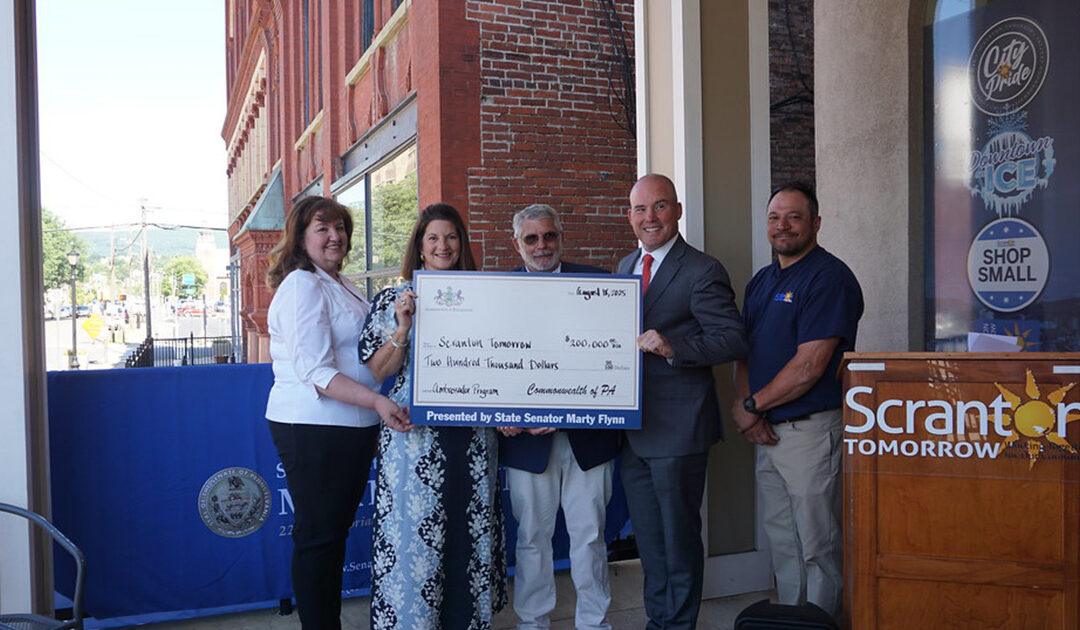
From left to right – Tammy Jackson, Leslie Collins, Steve Ward, Senator Marty Flynn, and Jeffrey Mead. Media outlets are welcome to use this photo in coverage of the announcement.
SCRANTON, PA – August 18, 2025 − Senator Marty Flynn today presented a $200,000 state grant to Scranton Tomorrow for the launch of its Scranton Tomorrow Ambassador Program, a year-round initiative that will enhance the city’s business district with on-street cleaning, safety, landscaping, and hospitality services.
Scranton Tomorrow’s Ambassador program will provide on street cleaning services five days a week to care for the core of downtown. Their work will include weed removal, litter control, graffiti cleanup, winter snow and ice clearing at sidewalk ramps and around hydrants, and preparations for events. They will also assist visitors and support projects that improve the appearance of the district over time. Jeffrey Mead, who brings extensive experience in this field, will serve as Operations Manager.
“Scranton takes pride in its public spaces, and this program makes that clear,” said Senator Flynn. “I was proud to bring this funding home, and I am proud of the work Scranton Tomorrow is doing to make this program a success.”
Joining Senator Flynn at the announcement were Leslie Collins, President and CEO of Scranton Tomorrow, Steve Ward, Project Manager for the Safe, Clean, Green and Design Program, Tammy Jackson, Chairperson of the Board, and Jeffrey Mead, Operations Manager of the Ambassador Program. The program is scheduled to begin operations on September 2, 2025, serving the downtown district from Mifflin Avenue to Jefferson Avenue and from Bogart Court to Mulberry Street.
###